
TOPBIB
The Digital Topographical Bibliography
of
Ancient Egyptian Hieroglyphic Texts, Statues, Reliefs, and Paintings


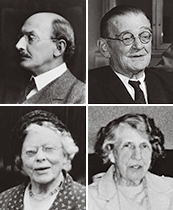 Oxford Professor for Egyptology Jaroslav Černý referred to
the Topographical Bibliography as the Scotland Yard of Egyptology,
where the skills of detective work were used to track down monuments and
publications.
Oxford Professor for Egyptology Jaroslav Černý referred to
the Topographical Bibliography as the Scotland Yard of Egyptology,
where the skills of detective work were used to track down monuments and
publications.
The Topographical Bibliography of Ancient Egyptian Hieroglyphic Texts, Statues, Reliefs and Paintings (also known as Porter & Moss or, in-house, TopBib), is an essential and comprehensive reference resource for Egyptologists, presenting and analysing both published and unpublished information about ancient Egyptian monuments. The first seven volumes are arranged topographically and cover the whole of Egypt and areas beyond, including Nubia (southernmost modern Egypt and northern Sudan). Volume 8 addresses the significant body of material in museums and private collections with no certain provenance. Published in January 2026, the current website is the digitised version of this long-running project.
The concept of a bibliography of Egyptian monuments arranged topographically was first proposed by the scholar and lexicographer Adolf Erman in the late 1890s, as a part of the scheme for the Berlin Wörterbuch. It was Francis Llewellyn Griffith, the first Professor of Egyptology at Oxford, who brought the idea to fruition by providing financial support and access to the resources of his private library.
Bertha Porter, a professional bibliographer, was employed by Griffith to analyse publications. After 20 years of collecting references an additional editor was sought. Rosalind Moss, a student of Griffith’s, gave the Bibliography the structure we are familiar with today. Following Porter’s retirement in 1929, Moss was joined by Ethel Burney, and they edited the seven volumes which covered the whole of Egypt, Nubia and beyond.
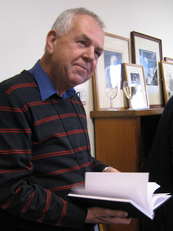 The later editorial partnership of Dr Moss and Mrs Burney has passed into
Egyptological folklore: they are affectionately referred to as the ‘Two
Ladies’, in reference to the ancient Egyptian goddesses of Upper and Lower
Egypt. The Two Ladies were succeeded in 1971 by Jaromir Malek who revised the
crucial Memphite volume and initiated the 8th volume in the series for objects
of provenance not known, an invaluable and timely expansion of the project’s
scope.
The later editorial partnership of Dr Moss and Mrs Burney has passed into
Egyptological folklore: they are affectionately referred to as the ‘Two
Ladies’, in reference to the ancient Egyptian goddesses of Upper and Lower
Egypt. The Two Ladies were succeeded in 1971 by Jaromir Malek who revised the
crucial Memphite volume and initiated the 8th volume in the series for objects
of provenance not known, an invaluable and timely expansion of the project’s
scope.
The editorship passed to Vincent Razanajao in 2012, followed by Anne-Claire Salmas in 2017, both of whom were tasked with the significant challenge of digitising the entire Topographical Bibliography. In 2019, the project assumed its current form, with its development continuing in collaboration with the University of St Andrews. The present website showcases the work completed to date, including the section on the tomb of Tutankhamun, compiled by Elizabeth Fleming, who has revised, edited, and expanded the project’s existing data relating to the tomb.
Material for the Bibliography is gathered from an ever-expanding range of multi-lingual sources, encompassing both specialist and semi-popular Egyptological and Near Eastern publications, periodicals, museum guides, exhibition and auction catalogues, together with the growing body of digital resources. The Bibliography also analyses a range of unpublished manuscripts, including those housed in the Griffith Institute Archive.
The TopBib records have been continuously revised and augmented, including heritage data collected for future updates. Approximately one million additional references are recorded on handwritten ‘Appendix slips’, awaiting digitisation and editorial review for inclusion in the new version of the project. The material is available for consultation by scholars.
The top bar shows the records above the current record in the hierarchy. One may navigate to these records by clicking on them.
Advanced search applies to substrings of titles, notes, or place names associated with records. One can filter results by the type of record, which may be: area, site, structure, or find.
Use advanced search when searching for an alternative spelling of a place name.